
Ebru Flow
No. 04ebru
IstanbulColor on water
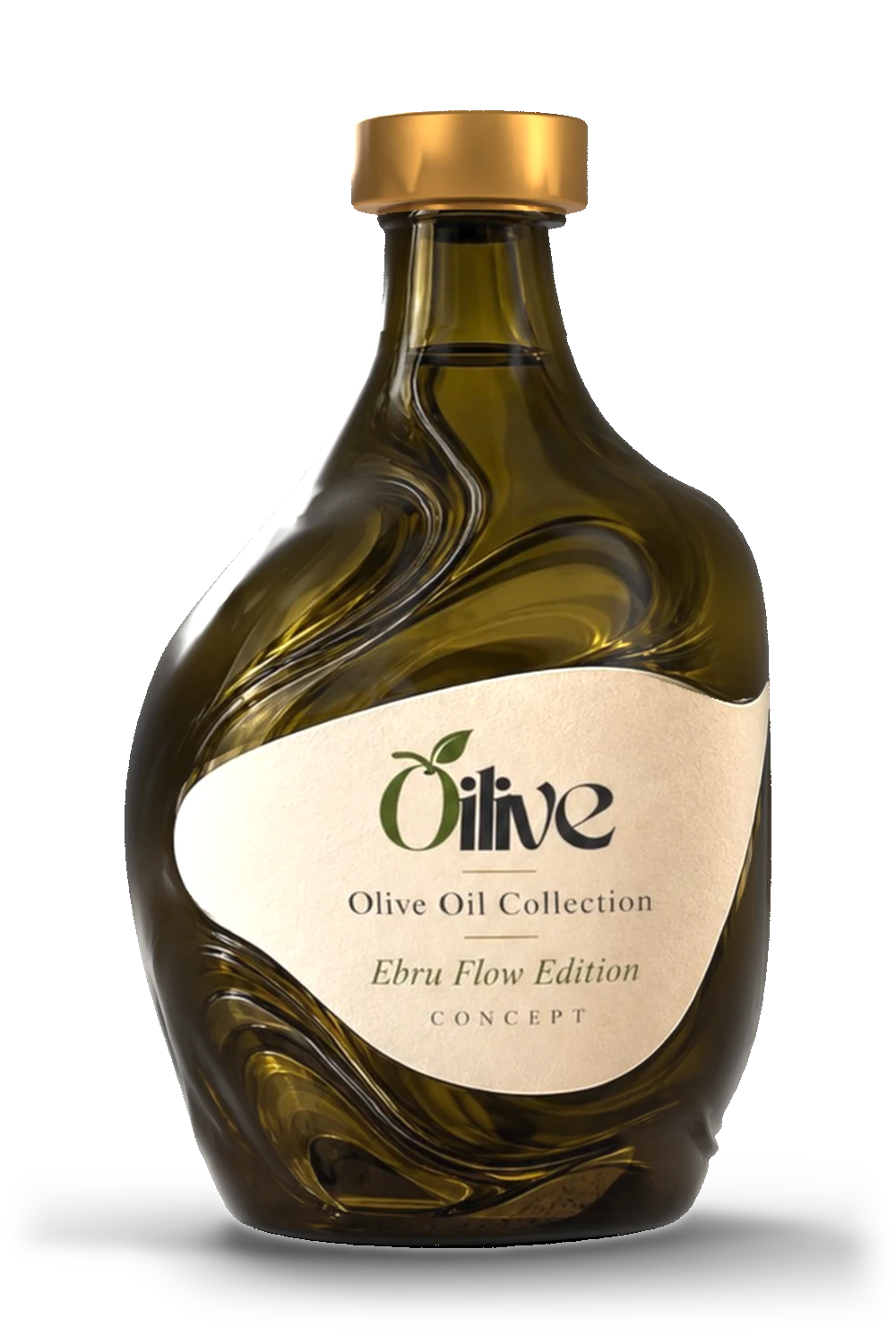
Color drifting on water, held in glass. A fluid expression of the art of ebru.
Why this bottle
In ebru, colour floats. Drops are laid on a bath of thickened water; they spread, refuse to mix, and are combed into patterns before a sheet of paper lifts them away. Oil behaves the same way on water, and that is why we chose it: the bottle’s glass swirls like a pattern caught halfway through the comb.
The culture behind it
Ebru is the Turkish art of paper marbling, its name from the Persian ebrî, cloud-like. The marbler fills a trough with water thickened with gum tragacanth, mixes earth pigments with a few drops of ox gall so they spread, and flicks them on with brushes of horsehair tied to rose twigs.
In Ottoman Istanbul, marbled sheets bound books and framed calligraphy. Patterns have names: battal, the plain stone; gelgit, back and forth; tarak, the comb; bülbül yuvası, the nightingale’s nest. In the twentieth century Necmeddin Okyay added flowers. Turkish ebru was inscribed on UNESCO’s list of Intangible Cultural Heritage in 2014.
Reading the bottle
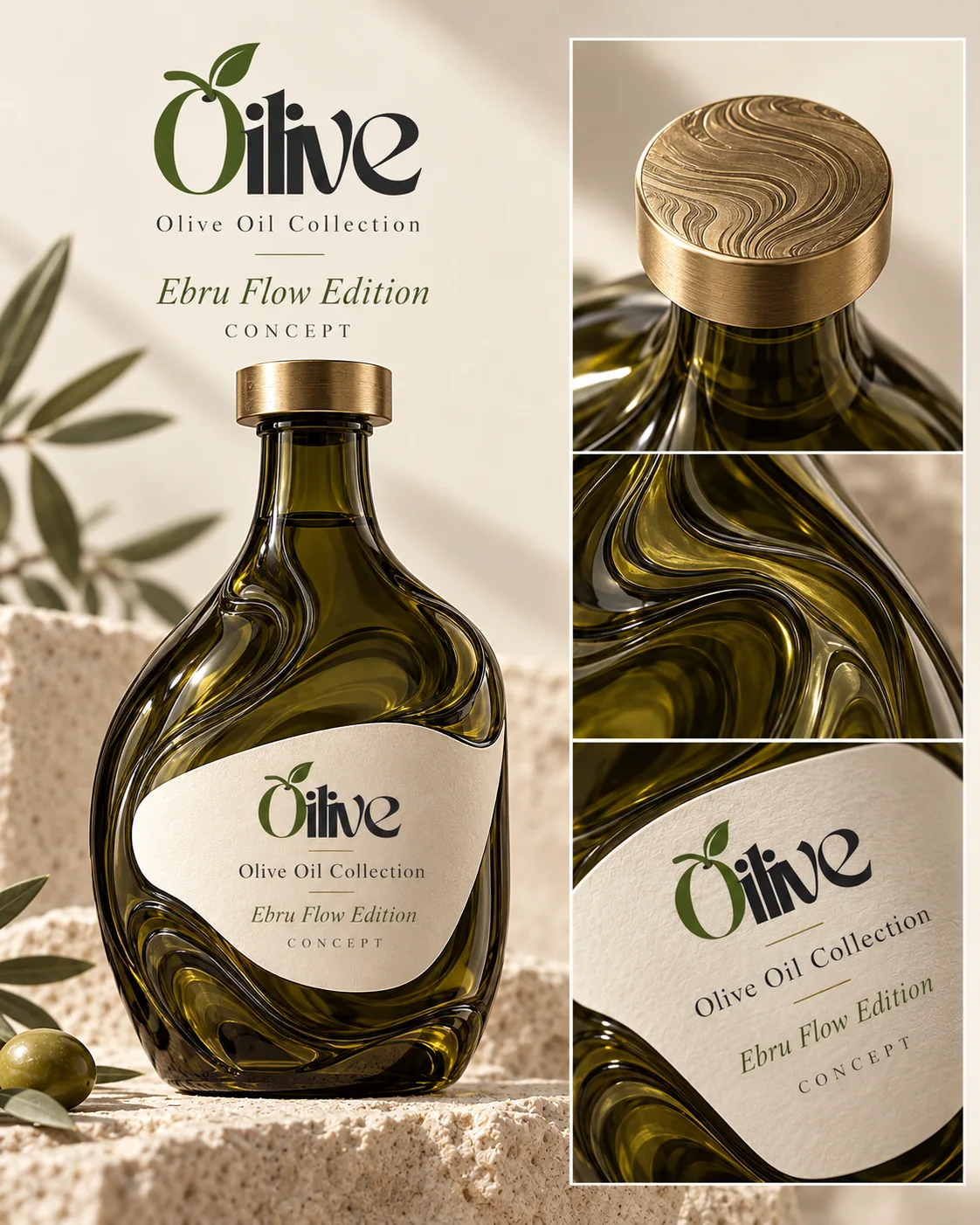
- 1The glassMoulded in currents, a pattern caught mid-comb.
- 2The labelA free wave, the edge of a sheet as it leaves the water.
- 3The colourOil-gold through the swirl, like pigment on the bath.
- 4The capA wave engraved on gold, the comb’s last pass.
From the bath to the sheet
Ebru is painted on water: pigments float on gum tragacanth, are combed into patterns and lifted onto paper. UNESCO-listed, 2014.
- BattalDrops of colour scattered on the bath.
- GelgitA stylus draws them back and forth.
- TarakA comb pulls the pattern through.
- The sheetPaper laid on the surface lifts it, once.
Turn it in your hand
Drag to turn it. The back carries the label of its story.

The word
ebru · marbling
Planned format
500 mL16.9 fl oz
Status
A design concept. Not for sale; production details are pending verification.

The other bottles
Images are illustrative. Orders are not open.