Kilim Weave
No. 03kilim
BergamaA language in thread
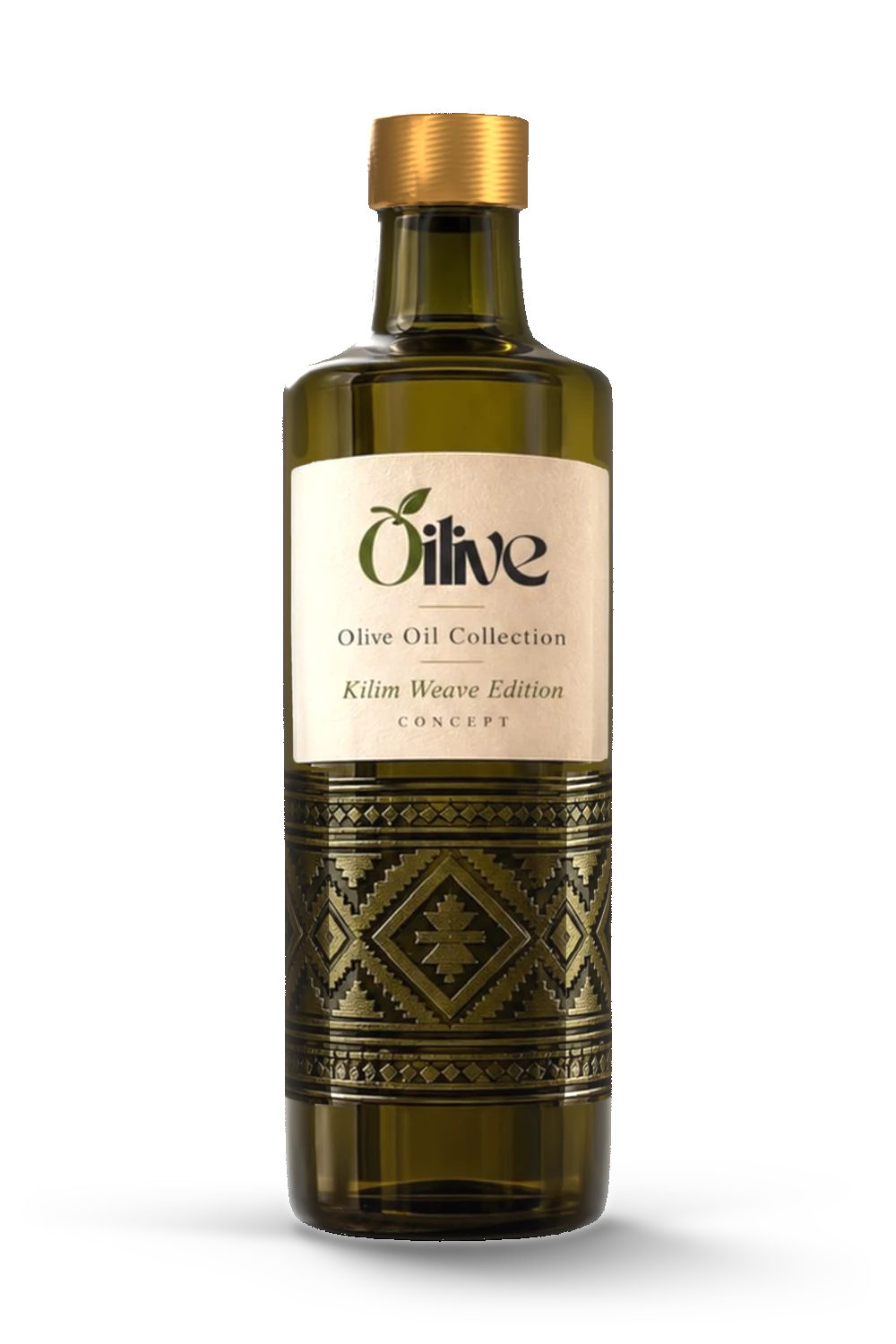
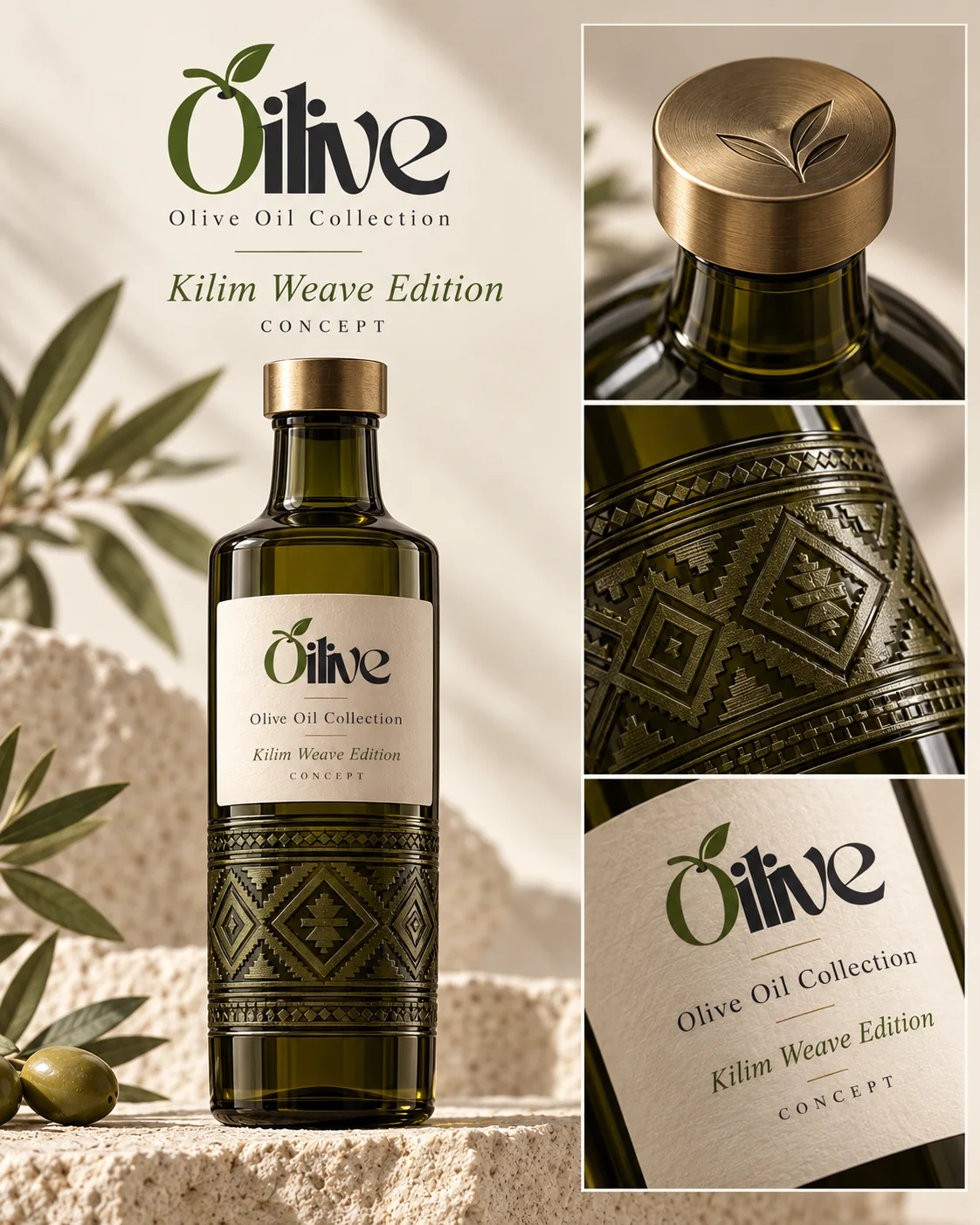
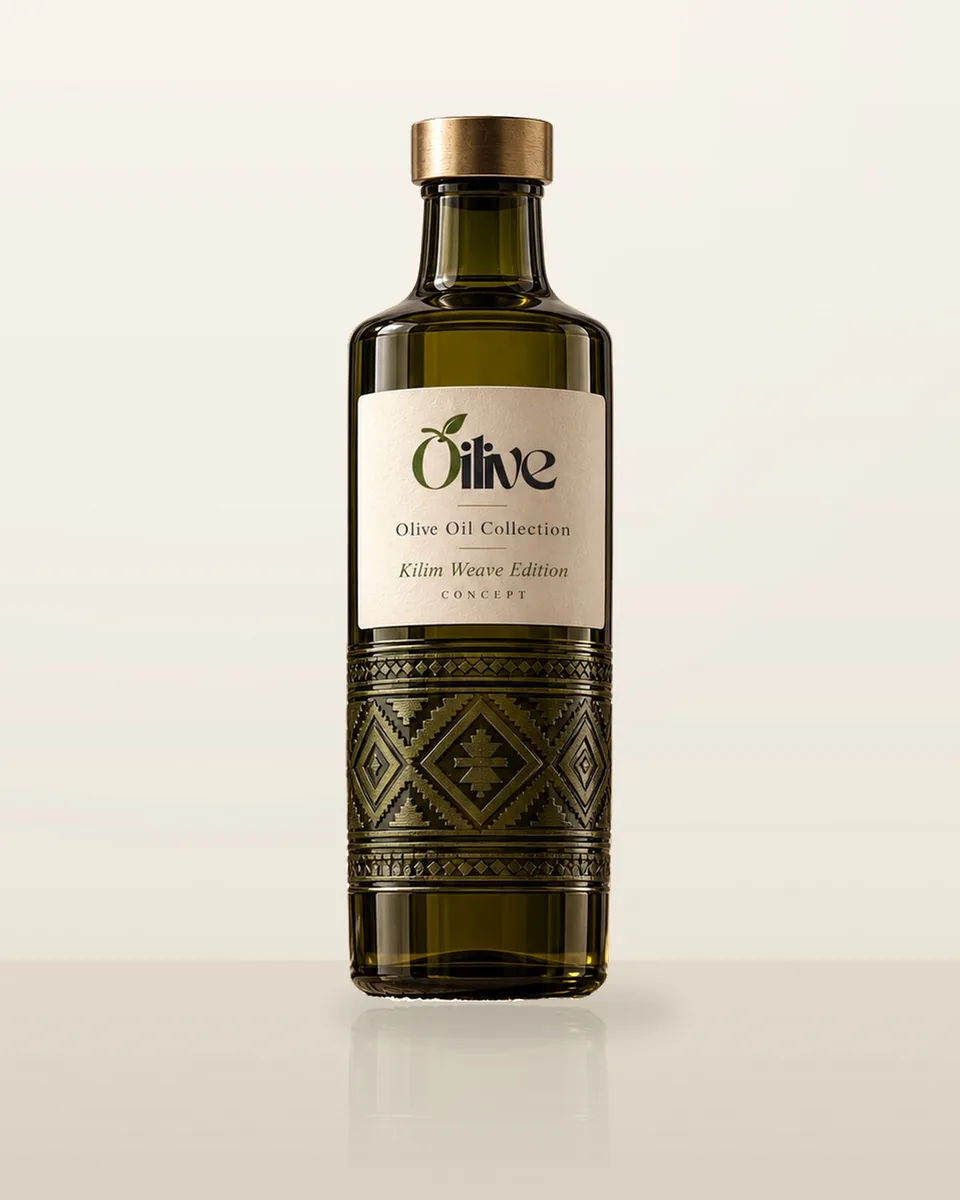
A woven band around dark glass. The patterns of a kilim, carried into a different form.
Why this bottle
A kilim is woven at home, by hand, in the same Aegean villages where olive trees are grown. Its motifs are not decoration but sentences: wishes for a house, a marriage, a child. We wrapped a band of that language around the dark glass, so the bottle carries a wish the way a kilim does.
The culture behind it
A kilim is flat-woven: there is no pile. Coloured wefts pass over and under the warp and turn back where a motif ends, leaving the small slits that mark the technique. Colours came from plants: madder roots for red, indigo for blue, weld for yellow, walnut husks for brown.
Girls traditionally wove kilims for their dowry, and the pieces were read as much as seen. Around Bergama, on the road from the coast to the olive groves, weaving families still keep patterns that are passed down, not written. Each motif carries a meaning, and a kilim is the sum of what its weaver wished.
Reading the bottle
- 1The bandA woven border around the lower body, as a kilim edges a room.
- 2The gözThe central lozenge: the eye that protects the house.
- 3The glassDark, like the wool ground the motifs are woven on.
- 4The labelA plain rectangle above the band, a woven panel left calm.
Four motifs, four wishes
Woven weft over warp, each motif a wish: elibelinde for abundance, koçboynuzu for strength, göz for protection, yıldız for happiness.
- ElibelindeHands on hips: motherhood and abundance.
- KoçboynuzuThe ram’s horn: strength and courage.
- GözThe eye: protection from harm.
- YıldızThe star: happiness and good fortune.
Turn it in your hand
Drag to turn it. The back carries the label of its story.

The word
kilim · flat-woven rug
Planned format
500 mL16.9 fl oz
Status
A design concept. Not for sale; production details are pending verification.

The other bottles
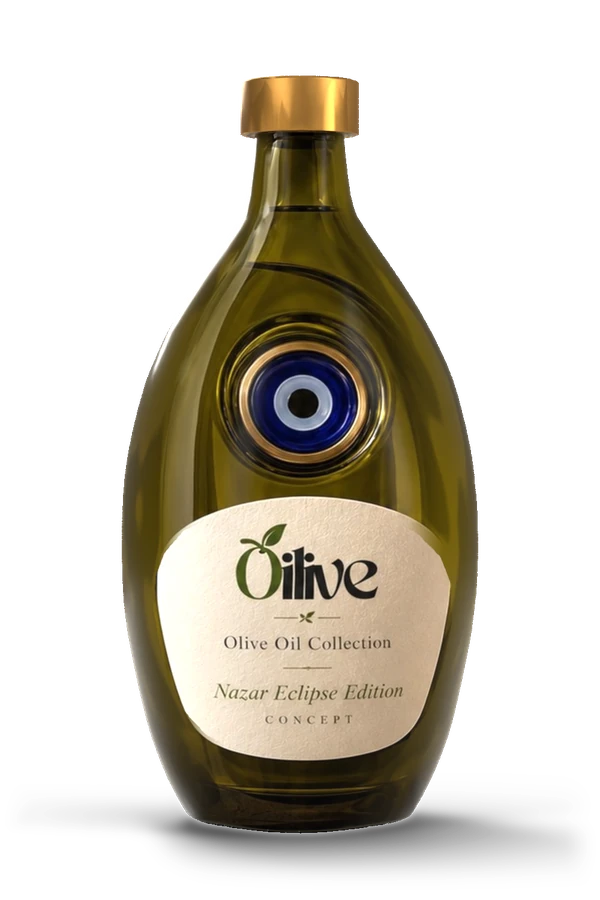
Images are illustrative. Orders are not open.